Custom yarn color matching is important when a knitwear collection needs a seasonal shade, buyer brand color or exact sample match. For fancy yarn, color matching can be more complex because texture, material and yarn structure all affect the final knitted appearance.
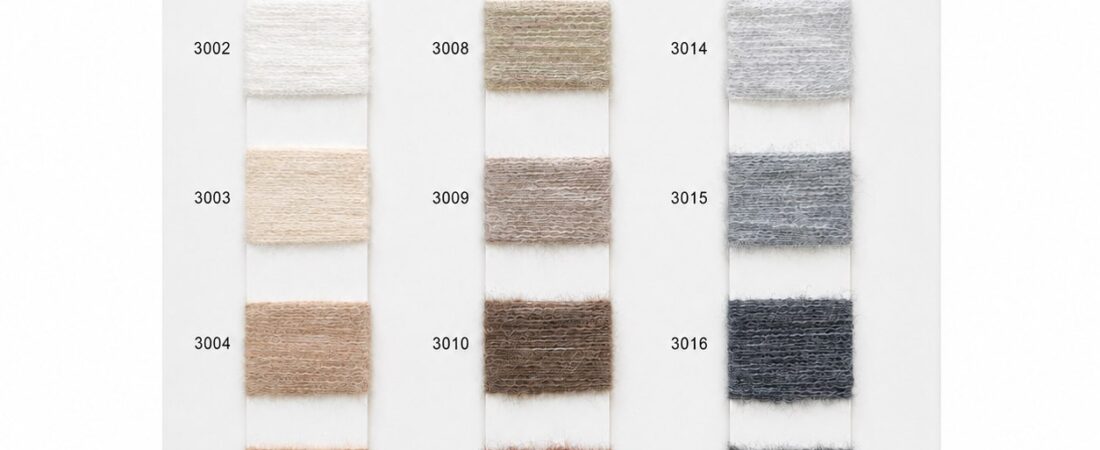
Qianyao Textile supports yarn color discussion through stock color cards, buyer samples, Pantone references and custom development projects.
What affects yarn color matching?
- Material: cotton, acrylic, nylon, polyester, viscose, wool blend and metallic components absorb or reflect color differently.
- Yarn structure: tape yarn, chenille yarn, brushed yarn, slub yarn and space dyed yarn show color in different ways.
- Knitted fabric: gauge, stitch, density and finishing change the visible shade.
- Light source: buyer approval should consider daylight, showroom light and final market needs.
- Bulk lot: production lot control should be discussed before large order confirmation.
Color reference options
Buyers can send a physical yarn sample, fabric swatch, garment cutting, Pantone number, color card photo or artwork. A physical sample is best when exact matching matters. For faster sourcing, start from stock yarn color cards.
Color matching by yarn type
Different yarns need different checks. For example, space dyed yarn needs color sequence and repeat discussion, while chenille yarn needs pile surface checking. Metallic yarn needs shine level and shade balance; brushed yarn needs color review after surface brushing.
How to request custom color development
Send the target color reference, yarn structure, material direction, count or gauge, application, sample deadline and estimated quantity. For custom projects, review custom yarn development and the MOQ guide.
Custom Yarn Color Matching FAQ
Can yarn color be matched from Pantone?
Yes, Pantone can guide the discussion, but physical sample or approved swatch is better for final yarn shade confirmation.
Can fancy yarn color look different after knitting?
Yes. Texture, gauge and finishing can change the visual result, so a knitted swatch is helpful before bulk approval.
Is stock color faster than custom color?
Usually yes. Stock color cards are faster, while custom colors need sample or dyeing confirmation and separate MOQ discussion.
Use Verified Yarn Parameters
For MOQ, lead time, yarn count, material ratio or testing data, use confirmed information from the Yarn Specification Checklist instead of estimated numbers.
Send a Yarn Color Matching Inquiry
Share your color reference, yarn type, material direction, gauge and quantity plan. We will check stock shades or custom color development options.
Related Buyer Guides
For sourcing decisions related to this page, buyers can also review what is space dyed yarn, metallic tape yarn for knitwear, what is tape yarn and request stock yarn color cards before confirming yarn structure, color, count and sampling details.
Custom Yarn Color Matching Details to Prepare
Custom yarn color matching works best when the buyer provides a clear standard. This may be a Pantone number, a physical fabric piece, a yarn swatch, a garment panel or an existing supplier color card. Photos alone can help communication, but they are usually not enough for final color approval because light source, screen settings and camera exposure can change the shade.
For multi-component fancy yarn, color matching should consider every visible material. Acrylic, polyester, cotton, nylon, wool, metallic yarn and recycled polyester may not respond to the same dyeing process. If the yarn contains metallic yarn, the base yarn is often colored before the metallic component is added, because high temperature finishing can affect metallic brightness.
Color matching checklist
- Provide the color standard and specify whether it is for the yarn cone or knitted fabric.
- Confirm whether the yarn uses solid color, space dyed color or mixed color fibers.
- Check color after knitting, washing or steaming if the final garment will be finished.
- Approve lab dip, yarn sample and knitted swatch when color risk is high.
For color communication systems, buyers can use references such as Pantone color systems together with physical swatches.
Related Sourcing Pages
Use these related pages when you want to compare yarn directions, request a sample, or prepare clearer specifications for Qianyao Textile.
- Request Stock Yarn Color Cards – review available colors before custom development.
- Space Dyed Yarn – color-repeat and spray-dyed yarn development.
- Metallic Tape Yarn – lurex and metallic tube yarn directions.
- Request Yarn Sample – send count, composition, color and hand-feel requirements.
- Yarn Specification Checklist – prepare clear sourcing details before sampling.
Yarn Color Card vs Yarn Shade Card: What Buyers Should Request
A yarn color card is useful when buyers want to choose from available shades first. A yarn shade card is more useful when the buyer needs a custom color direction for a specific sweater fabric, yarn count or fiber blend.
For custom yarn color matching, we can work from customer color numbers, Pantone references, physical fabric pieces, original yarn samples or existing stock color cards. The more exact the reference, the easier it is to reduce sample rounds and avoid color misunderstanding.
Before development, confirm whether the yarn will be solid color, space dyed, spray dyed or combined with metallic yarn. Some structures need color planning before yarn forming, especially metallic tube yarn and space dyed yarn.
Cotton Yarn Color Matching Before Sampling
For cotton yarn, cotton tape yarn and cotton chenille yarn, color matching should be discussed before sample production. Buyers can send a Pantone number, customer color code, physical fabric swatch or existing yarn color card reference. If a space dyed or spray dyed effect is required, the color repeat and color section must also be confirmed.
For cotton blend fancy yarn, different fibers may absorb dye differently. This is why the color plan, material ratio and final fabric target should be checked together instead of treating color as a separate step.
Request stock yarn color cards or send a custom color yarn inquiry.