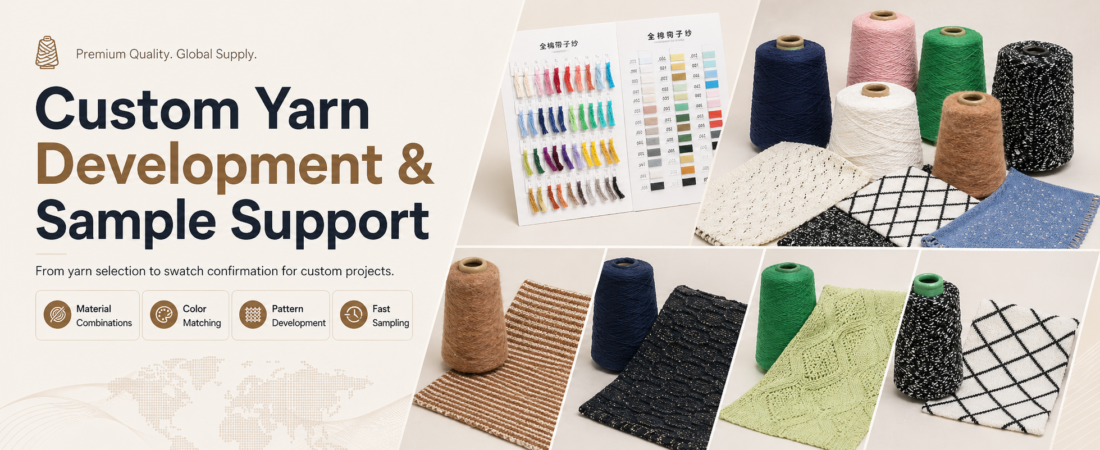
Yarn sample development is often the first step before a sweater brand confirms bulk yarn supply. A clear sample request helps the supplier understand the target fabric, hand feel, color, gauge and price direction before making recommendations.
Qianyao Textile supports sweater brands, knitwear factories and sourcing teams with fancy yarn sampling, stock color card selection and custom yarn development.
What sweater brands should prepare
- Garment direction: sweater, cardigan, vest, scarf, accessory or trim.
- Reference: yarn sample, fabric swatch, garment photo, color card or design artwork.
- Gauge: machine gauge, hand knitting gauge or target fabric density.
- Material target: soft, warm, lightweight, cotton-like, wool-like, shiny or textured.
- Order plan: sample deadline, estimated bulk quantity, delivery country and season.
Choose stock yarn or custom sample?
For fast development, start with stock yarn color cards. For a specific texture, special color, buyer sample or new structure, use custom yarn development.
Useful yarn structures for sweater brands
Common choices include tape yarn, brushed yarn, chenille yarn, filled tube yarn, space dyed yarn, slub yarn and blended yarn.
How to send a useful yarn sample request
Include target effect, material, yarn count or gauge, color reference, sample quantity and estimated bulk order. If you already have a physical yarn or fabric sample, read how to send a yarn sample for custom development.
Yarn Sample Development FAQ
Can a sweater brand start from a photo?
Yes, a photo can start the discussion. For accurate matching, physical yarn or fabric samples are better.
How many sample details are needed?
Gauge, material direction, color reference, target hand feel and quantity plan make supplier recommendations much more accurate.
Can sample yarn be developed before bulk order?
Yes. Sample development is common before bulk production, especially for custom color, new structure or buyer sample matching.
Use Verified Yarn Parameters
For MOQ, lead time, yarn count, material ratio or testing data, use confirmed information from the Yarn Specification Checklist instead of estimated numbers.
Start Yarn Sample Development
Send your sweater style, sample reference, gauge, color direction and order plan. We will check stock yarns or custom development options.
Yarn Sample Development Checklist for Buyers
A good yarn sample request should reduce guessing before the supplier starts development. For sweater yarn, buyers should prepare the target count, knitting gauge, composition range, color reference, hand feel, order purpose and any special finishing restriction. If the yarn includes metallic yarn, space dyed yarn or multiple fiber types, the sampling route should be confirmed before color work starts.
Useful references include Pantone numbers, existing color cards, physical fabric pieces, buyer swatches and clear photos under natural light. For custom yarn development, a small difference in yarn count or twist can change the fabric weight and hand feel, so the supplier should understand the final garment application before making the first sample.
Information to send before yarn sampling
- Target yarn count, such as NM count or the buyer’s existing sample count.
- Machine gauge or intended use, such as 3GG, 5GG, 7GG sweater, scarf or cardigan.
- Fiber preference, including cotton, acrylic, polyester, nylon, wool or recycled polyester.
- Color standard, physical sample or existing color card reference.
- Required hand feel, surface effect and any restriction on high temperature processing.
For basic terminology, buyers can cross-check yarn and textile terms through The Textile Institute textile terms database.
Custom Yarn Sample Reference and End-Use Questions
What is the most useful reference for a custom yarn sample?
A physical yarn, fabric or garment swatch is usually more reliable than a photo. If only photos are available, buyers should also provide count, composition, gauge and target hand feel.
Why should buyers share the final garment use?
The same yarn may need different count, twist or softness for sweaters, scarves, accessories or hand knitting yarn balls. End use helps the supplier avoid an attractive but unsuitable sample.
Related Sourcing Pages
Use these related pages when you want to compare yarn directions, request a sample, or prepare clearer specifications for Qianyao Textile.
- Request Yarn Sample – send count, composition, color and hand-feel requirements.
- Yarn Specification Checklist – prepare clear sourcing details before sampling.
- Tape Yarn – round tape and tube-style sweater yarn options.
- Brushed Fancy Yarn – soft brushed yarn for sweaters and scarves.
- Metallic Tape Yarn – lurex and metallic tube yarn directions.
From Sweater Yarn Idea to Sample Request
For custom sweater yarn development, buyers usually need to confirm the yarn type first: chenille yarn for plush hand feel, brushed yarn for fuzzy warmth, tape or tube yarn for structure, metallic yarn for lurex effect, or space dyed yarn for color repeat. The sample process becomes faster when the buyer provides count, gauge, material, color reference and target fabric.
If the project is still at the selection stage, compare fancy yarn types for sweater development, check the NM yarn count guide, then send a yarn sample request with the details you already know.
Sample Development Starts with the Fancy Yarn Type
When a sweater buyer asks for a new sample, the first step is choosing the right fancy yarn type for the target fabric effect. A clear request should include count, composition, gauge, color standard and a physical or photo reference. This helps decide whether chenille, brushed, tube, metallic, space dyed or another novelty yarn direction should be tested.
Compare fancy yarn types before sending a sample request.
Yarn RFQ Support
Send a Yarn RFQ with Photos or Specs
For a faster reply, send the yarn type, target NM count, composition, color reference, gauge or end use, and sample or bulk quantity. A yarn photo, fabric swatch or sweater panel photo is also helpful.
- Yarn type: tape yarn, tube yarn, metallic yarn, chenille yarn, brushed yarn, space dyed yarn or custom fancy yarn.
- Technical target: count, material, color route, gauge and hand feel.
- Order stage: stock color card, sample development or bulk production.